Shadow Puppets Museum
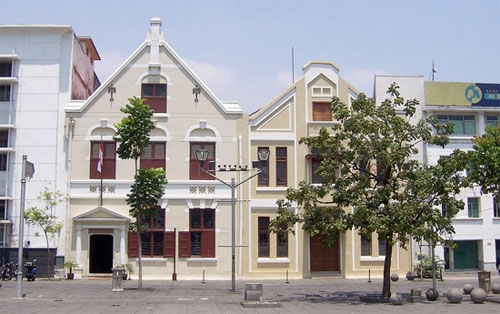
This artistic building stay at Pintu Besar Utara Street 27, West Jakarta, was built in 1912, previously as land of a church, which was built in 1640 under the name of De Oude Hollandsche Kerk (The Old Dutch Church). In 1732 it was renovated and its name was changed into De Nieuwe Hollandsche Kerk (The New Dutch Church). The church building was once totally destroyed by an earthquake. Bataviasche Genootschap van Kunsten en Wetenschappen (Batavia Society of Arts and Sciences), that was an institution dealing with science and Indonesian culture bought this building.
The institution then delivered this building to the Stichting Oud Batavia (Old Batavia Foundation) and on 22 December 1939. It was made a museum under the name of Oude Bataviasche Museum (Old Batavia Museum). In 1957 this building was delivered to Lembaga Kebudayaan Indonesia (Institute of Indonesian Culture) and on 17 September 1962 it was delivered to the Ministry of Education and Culture of the Republic of Indonesia, which later was delivered to the DKI Jakarta Administration on 23 June 1968 to be made Shadow Puppet Museum, which inauguration was carried out on 13 August 1975.
Shadow Puppet (commonly known as wayang) in Indonesia, especially on Java Island, was originally a product of the Royal Court culture. It was first used as an instrument of worship to the ancestors, and after the Hindu culture entered Indonesia iaround the 5th century, it developed shifting of values. The world of Indonesian shadow puppet got characteristically influence especially in term of story, like the Ramayana (the Story of Rama) and Mahabharata (the Great Bharata), making the form of presentation keep on changing and with wider range in performance and in the theme of the story. In its later development the Indonesian shadow puppet had become such tradition, that it has been capable to hold out in the supporting community consisting of various elements. Visitors of this Museum are invited to know various characters, attitude and behavior of the story from various regions through the performance of shadow puppet that has weight of high value in our culture and viewing a number of collections of shadow puppet like wayang kulit, wayang golek, patung wayang, topeng wayang, wayang beber, wayang kaca, gamelan (traditional music instrument set) as well as wayang paintings.
This Museum also displays various collections of wayang and dolls from friendly countries like Malaysia, Thailand, Suriname, China, Vietnam, France, India and Cambodia. It is not merely to be an object for recreation, study for students/ devotee can be carried out in this Museum, and this Museum even can be used as venue for training, documentation center and research on shadow puppet, and it can be used as inter-regional and international media on cultural knowledge. To support its existence, in this Museum wayang staging and attraction of wayang making are periodically organized.

Betawi Batik to Ondel-ondel Dolls, Featured Products of Betawi
As the capital city of Indonesia, Jakarta is not only famous for its skyscrapers and the title as one of the largest metropolitan cities in the world. There are many other unique things that Jakarta has to offer, one of them is the creative typical product of Betawi—the native people of Jakarta. As is known, Betawi tribe who inhabit Jakarta as well as parts of West Java and Banten have unique cultural products. For example, lenong. However, as time goes by, the existence of lenong is increasingly displaced and it…
Things That Make Tourists Surprised While on Vacation to Kepulauan Seribu
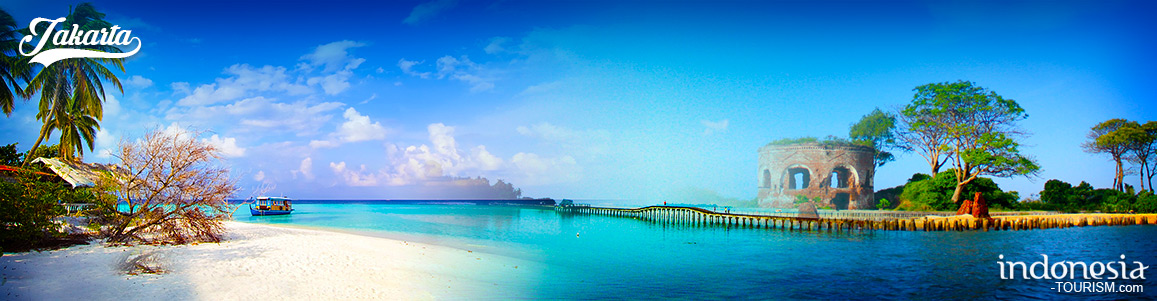
For Indonesians, the name of Kepulauan Seribu is already familiar. However, it is different from foreign tourists who rarely hear about the beauty of these islands. They do not think that there is a beautiful natural tourism that is not far from Jakarta. Want to know more details? When boarding the ship to Seribu islands, foreign tourists find it difficult to communicate with the ship’s crew, because most of them do not speak English. This is because the crew in Kepulauan Seribu are mostly local people who do not speak…
Istiqlal Mosque Becomes a Religious Tourism Destination
Istiqlal Mosque is one of the halal tourist destinations in Indonesia. The construction process in a number of areas of the largest mosque in Southeast Asia has been completed and has made it ready as a place of worship, study, as well as tourism. The Istiqlal Mosque has become an icon of Indonesia. Many tourists and national heads who visited Indonesia then saw the beauty of the Istiqlal Mosque. If you enter to the mosque, with five floors and one ground floor, you will see the splendor of modern architecture…
MACAN Museum, Attractive Vacation Spot in Jakarta
Jakarta City always becomes the center of tourism, especially for foreigners who spend a vacation in Indonesia. It is the capital city of the nation, after all. That means Jakarta becomes a perfect checkpoint before visiting other regions. Aside from that, it also has tons of attractive vacation spots that offer different themes. For instance, there is the MACAN Museum in Kebon Jeruk Sub-District. Tourists only need to reach Perjuangan 5 Street in order to get to the museum. So, what is in there? Well, the official name is the…